Building a Fire in Wet Conditions
Starting a fire in wet conditions presents a unique set of challenges that require preparation, knowledge, and adaptability. Moisture affects every stage of the fire-building process, from finding suitable tinder to maintaining a steady flame. Understanding how water interacts with different materials and how to work around these obstacles is essential for anyone who spends time outdoors in damp or rainy environments.
This article outlines a systematic approach to building and sustaining a fire when conditions are less than ideal. It covers the selection and preparation of tinder, the use of fire starters, and techniques for maintaining a fire despite ongoing moisture. The focus is on practical methods that can be adapted to various situations, with an emphasis on process rather than guaranteed results.
While the techniques described here are widely used, success depends on multiple factors, including the specific environment, available resources, and individual skill level. The information provided is intended to inform and guide, not to replace hands-on practice or professional instruction.
Understanding the Impact of Moisture on Fire Building
Moisture affects combustion by absorbing heat and reducing the ability of materials to ignite. When wood or other fuels are damp, much of the initial energy from a match or lighter is used to evaporate water rather than to raise the material to its ignition temperature. This is why even a small amount of dampness can prevent a fire from starting or cause it to smolder and die out.
In wet conditions, the availability of dry fuel becomes the primary limiting factor. Rain or high humidity can saturate the ground, making it difficult to find dry wood or tinder. Even materials that appear dry on the surface may contain internal moisture that will hinder combustion. Recognizing these challenges allows for better planning and more effective problem-solving.
Another consideration is the effect of wind and rain on the fire itself. A steady drizzle can extinguish a nascent flame, while wind can scatter embers and make it harder to build a concentrated heat source. Sheltering the fire from these elements is often as important as the ignition process itself.
Understanding these factors helps in selecting the right techniques and materials. For example, in a downpour, a fire may need to be built under a natural or improvised shelter, and tinder must be kept in a waterproof container until the moment of use. Anticipating these needs before heading outdoors can make a significant difference in the ability to build a fire when conditions are unfavorable.
Locating and Preparing Dry Tinder
Tinder is the most critical component of a fire in wet conditions because it must catch the initial spark and sustain a flame long enough to ignite larger fuels. In damp environments, finding dry tinder requires looking in protected areas where moisture has not penetrated. Dead branches still attached to trees, the inner bark of some species, and dry grass sheltered under rocks or dense vegetation are common sources.
One effective method is to look for dead standing wood, which is often drier than wood on the ground. The inner layers of such wood can be shaved or split to reveal dry material. Similarly, the fibrous inner bark of certain trees, such as cedar or birch, can be processed into a fluffy tinder bundle that catches spark easily.
Another approach is to carry tinder from home. Materials such as petroleum jelly-soaked cotton balls, char cloth, or commercial fire starters can be invaluable when natural tinder is scarce or too damp. These items should be stored in a waterproof container to ensure they remain dry until needed.
Preparing tinder also involves processing it to increase surface area. The finer the tinder, the easier it is to ignite. Shredding, fluffing, or scraping materials into a loose pile exposes more surface to the flame and allows for a quicker transition to sustained burning. This step is especially important when the tinder is only marginally dry.
It is also wise to gather more tinder than seems necessary. In wet conditions, initial attempts may fail, and having a surplus of dry tinder allows for multiple tries without depleting the supply. Collecting tinder from several different sources can provide a backup if one type proves difficult to ignite.
Using Fire Starters and Ignition Sources
Fire starters are tools or materials designed to make ignition easier, especially in challenging conditions. They can be commercial products, such as ferrocerium rods or chemical fire starters, or improvised items like cotton balls coated in wax. The key function of a fire starter is to provide a sustained, high-temperature flame that can overcome the moisture in the surrounding fuel.
When using a ferrocerium rod, for instance, the spark is extremely hot and can ignite tinder even if it is slightly damp. However, the tinder must still be as dry as possible and properly prepared. The rod should be scraped with a striker in a downward motion, directing sparks onto the tinder bundle. This method is reliable in windy conditions because the sparks are not easily blown out.
Chemical fire starters, such as those containing potassium permanganate and glycerin, produce a spontaneous flame when mixed. These are effective in wet conditions because the reaction generates its own heat and is less dependent on external ignition sources. However, they require careful handling and should be used according to the manufacturer’s instructions.
Improvised fire starters can also be made from common materials. For example, a cotton ball rubbed with petroleum jelly will burn for several minutes, providing ample time to ignite larger fuels. Similarly, the lint from a clothes dryer can be packed into a small container and used as tinder. These options are lightweight and can be carried as part of an emergency kit.
Regardless of the ignition source, it is important to have a backup. Matches and lighters may fail in wet or windy conditions, so carrying multiple ignition methods increases the likelihood of success. Storing them in waterproof containers is essential to ensure they function when needed.
Techniques for Building and Sustaining the Fire
Once tinder and ignition are ready, the next step is to build the fire in a way that protects the initial flame and allows it to grow. The location should be sheltered from rain and wind, such as under a dense tree canopy, behind a rock outcropping, or beneath an improvised tarp. The ground should be cleared of wet debris and, if possible, insulated with a layer of dry bark or stones to keep the fire off the damp ground.
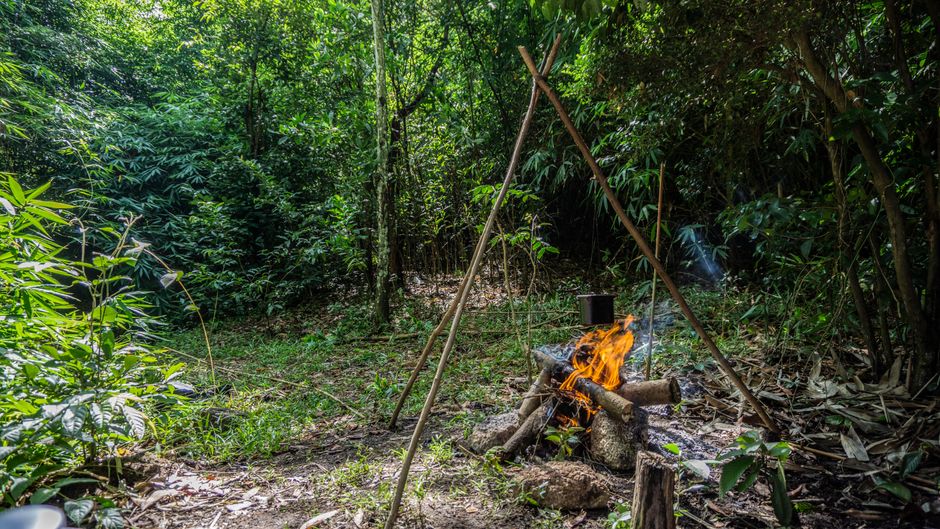
Fire layering is a common technique for wet conditions. This involves arranging larger pieces of fuel around the tinder in a crisscross or teepee pattern, allowing air to circulate while shielding the flame from falling moisture. The fuel should be added gradually, starting with small twigs and progressively larger branches as the fire grows. It is important to use dry wood for the initial stages; even slightly damp wood can smother a young flame.
Maintaining the fire requires ongoing attention. In rainy conditions, it may be necessary to continually feed the fire with dry fuel and to adjust the arrangement to keep the flame protected. A small, hot fire is often more effective than a large, struggling one because it is easier to manage and less susceptible to being extinguished by rain.
Another useful technique is to create a reflector. A stack of logs or a wall of stones placed behind the fire can reflect heat back onto the fuel and help dry out damp wood that is placed nearby. This can expand the usable fuel supply and improve the fire’s resilience.
Finally, it is important to have a plan for extinguishing the fire properly. In wet conditions, this may be as simple as allowing it to burn down, but care should be taken to ensure that all embers are fully extinguished before leaving the site. Dousing with water and stirring the ashes is a standard practice, even in damp environments, to prevent accidental wildfires.
Safety and Environmental Considerations
Building a fire in wet conditions carries specific safety risks that should be addressed. Wet rocks can explode when heated, so it is best to avoid using rocks from a riverbed or damp areas as a fire ring. Instead, use established fire rings or clear a area of debris down to mineral soil. Never leave a fire unattended, and always have a means of extinguishing it readily available.
Environmental impact should also be considered. In many protected areas, fires may be restricted or prohibited, especially during dry periods or when fire danger is high. Even in wet conditions, it is important to follow local regulations and practice Leave No Trace principles. Using a portable stove is often a better alternative when conditions are marginal or when fires are not allowed.
Gathering firewood should be done responsibly. Dead and downed wood is generally preferred over cutting standing trees, and in some areas, collecting wood may require a permit. It is also important to avoid introducing invasive species by moving firewood from one area to another.
Personal safety is equally important. Working with fire in wet conditions can lead to slippery footing and increased risk of burns or falls. Wearing appropriate clothing and using tools safely can reduce these risks. Additionally, having a basic understanding of first aid for burns is advisable for anyone spending time outdoors.
In summary, building a fire in wet conditions requires a combination of preparation, the right materials, and adaptable techniques. By focusing on dry tinder, reliable fire starters, and protective fire layering, it is possible to achieve a sustainable fire even in challenging weather. However, success is never guaranteed and depends on a variety of external factors. Continual practice and a respectful approach to fire safety and the environment will help ensure that these skills remain effective and responsible.